
Why Weather Plays a Key Role in Mosquito Activity
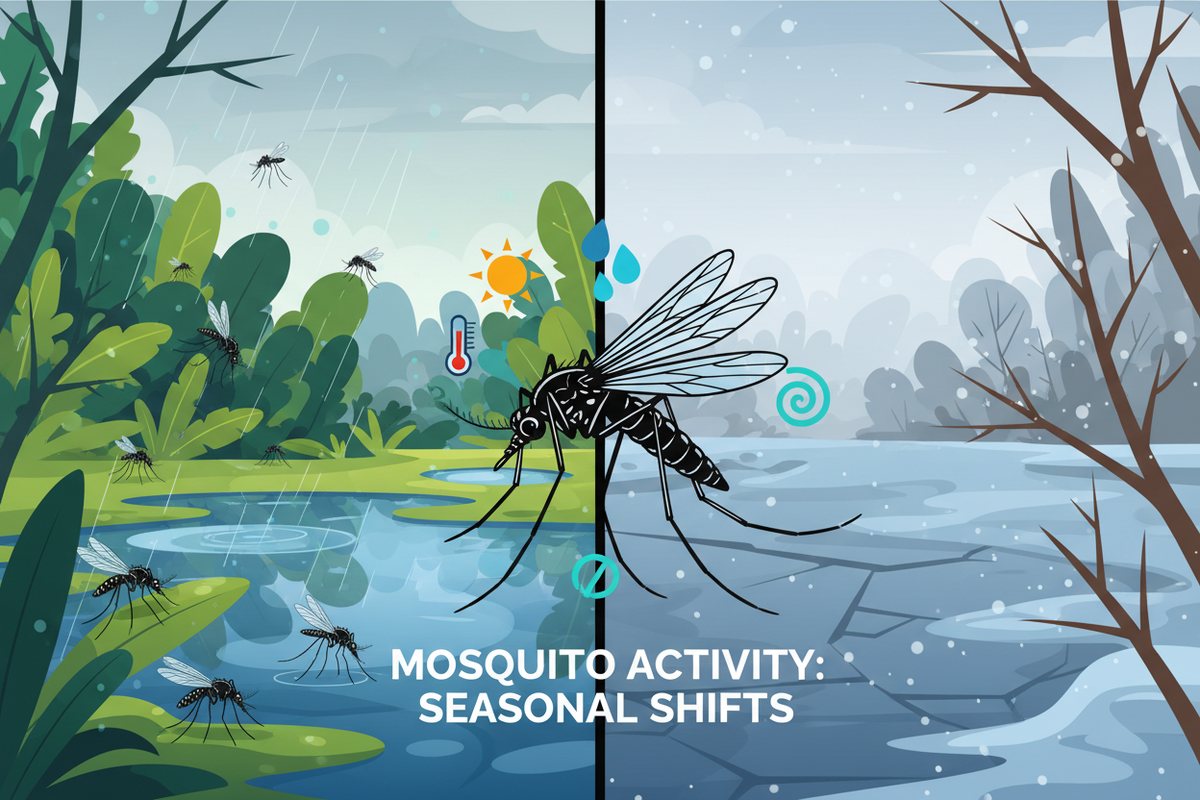
Mosquito activity is closely tied to weather conditions. Temperature, humidity, rainfall, and wind can significantly influence how often mosquitoes appear, how aggressively they bite, and how quickly they reproduce.
In the United States, seasonal weather patterns directly shape mosquito populations—making certain times of the year much riskier than others.
Temperature: The Main Driver of Mosquito Activity
Temperature is the single most important factor affecting mosquito behavior.
-
Warm weather (70–90°F) creates ideal conditions for mosquito activity and reproduction
-
Higher temperatures accelerate their life cycle, allowing populations to grow rapidly
-
Cold weather slows down or completely stops mosquito activity
Mosquitoes are cold-blooded insects, which means their metabolism depends on external temperatures. As a result, warmer conditions lead to more frequent biting and faster breeding cycles.
Humidity: Why Moist Air Increases Mosquito Bites
Humidity plays a crucial role in mosquito survival and activity.
-
High humidity helps mosquitoes stay hydrated and active
-
Dry air shortens their lifespan
-
Moist conditions allow mosquitoes to travel farther in search of hosts
In humid regions—especially across the southern United States—mosquitoes tend to be more persistent and aggressive.
Rainfall: Breeding Opportunities vs. Population Control
Rainfall can both increase and decrease mosquito populations, depending on its intensity.
Light to Moderate Rain
Heavy Rain and Storms
However, once storms pass, newly formed standing water often leads to a rapid rebound in mosquito activity.
Standing Water: The Hidden Risk After Rain
Mosquitoes lay eggs in stagnant water, and even small amounts are enough to support breeding.
Just a few days of standing water can result in a noticeable increase in mosquito populations around your home.
Wind: A Natural Mosquito Deterrent
Mosquitoes are weak fliers, so wind has a strong impact on their activity.
This is why mosquitoes are often more active in sheltered areas such as backyards, patios, and gardens.
Seasonal Patterns in the United States
Mosquito activity varies throughout the year:
In warmer states, mosquito season can last significantly longer—or even continue year-round.
When Are Mosquitoes Most Active During the Day?
Most mosquito species are most active during:
However, some species—especially in shaded or humid environments—may remain active throughout the day.
How Weather Changes Increase Mosquito Risks
Shifting climate patterns are influencing mosquito populations across the US:
As a result, mosquito-related risks are expanding into new regions.
How to Reduce Mosquito Activity Around Your Home
Understanding how weather affects mosquitoes allows you to take more effective preventive action.
Practical Prevention Tips
Using multiple strategies together provides the best protection.
Why Weather-Based Prevention Is So Effective
Because mosquito activity is driven by environmental conditions, managing those conditions around your home is one of the most effective ways to reduce bites.
By proactively controlling water sources, airflow, and outdoor environments, you can significantly lower mosquito populations—even during peak season.
FAQ
Do mosquitoes prefer hot or cold weather?
Mosquitoes thrive in warm weather. Cold temperatures slow their activity or stop it entirely.
Does rain increase mosquito populations?
Yes. Rain creates standing water, which serves as breeding sites for mosquitoes.
Are mosquitoes active on windy days?
Less active. Wind makes it harder for mosquitoes to fly and locate hosts.
What weather conditions are ideal for mosquitoes?
Warm temperatures, high humidity, and calm air create optimal conditions.
How can I reduce mosquitoes after rainfall?
Remove standing water quickly and use outdoor mosquito control methods.